

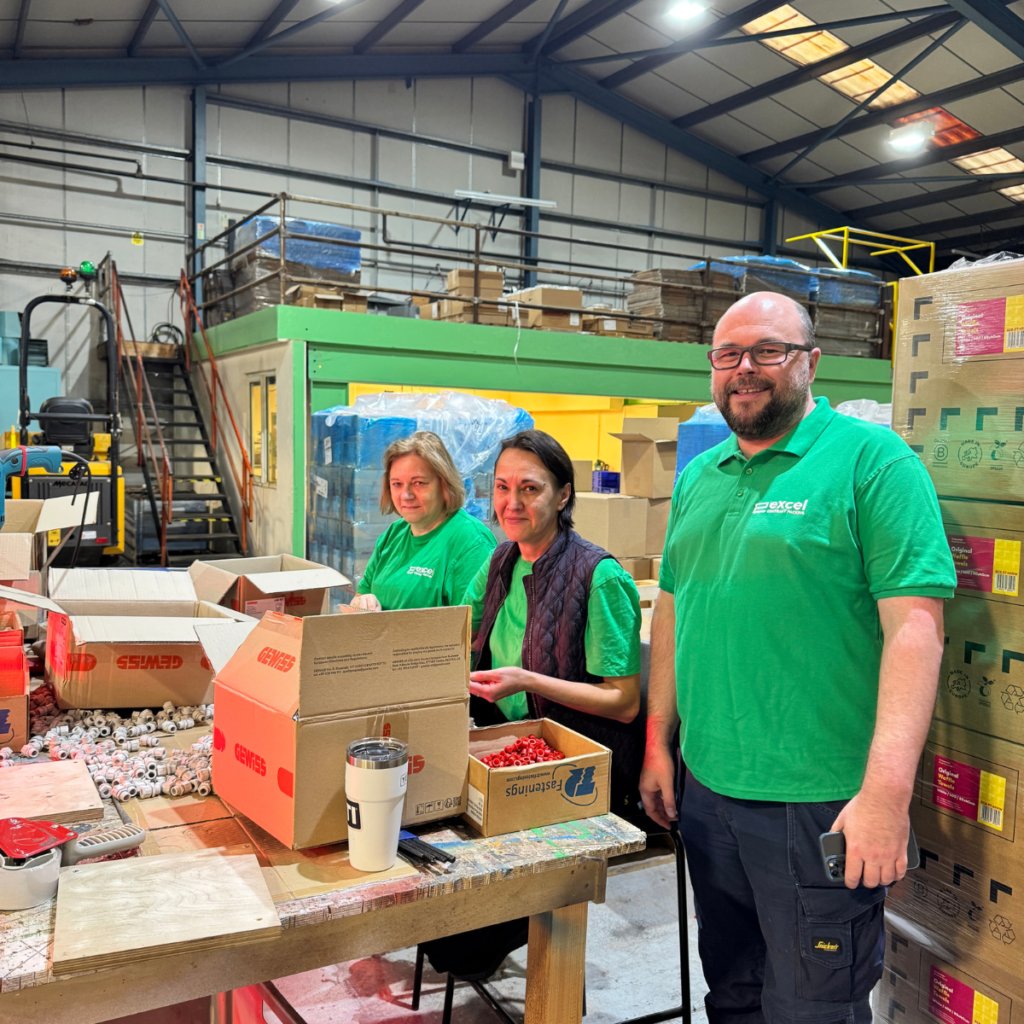
For many manufacturers, outsourcing your packing can feel like a big decision.
You might know your current packing process is taking up too much time, space, money or energy. You might also know your team could be focusing on higher-value work if packing was handled elsewhere.
But even when the pressure is obvious, one question usually remains:
Will outsourcing actually improve things for us?
That is a fair question.
After all, you are not just handing over “a packing job”. You are trusting another team with your products, your deadlines, your customer expectations and an important part of your operation.
That is exactly why a trial run can be so useful.
Instead of guessing whether outsourced packing is the right move, you can test it with one real job first.
What is a packing trial run? 🤔
A packing trial run gives manufacturers the chance to test outsourcing your packing before making a bigger commitment.
Rather than moving every packing job over straight away, you choose one product, one batch or one process for your contract packing partner to handle.
That job might involve:
- Packing products into boxes or pallet boxes
- Labelling or over-labelling
- Kitting or assembly-style packing
- Hand packing
- Wrapping and preparing goods for dispatch
- Getting finished products ready to move
The aim is simple.
You send a real job through the process, then see what changes.
- Does it save your team time?
- Does it free up space?
- Does the job move more smoothly?
- Does it reduce the hassle your team has been managing internally?
- Does it make commercial sense?
A trial run helps you answer those questions with proof, not guesswork.
Why manufacturers hesitate before outsourcing packing 👇
Many manufacturers keep packing in-house for longer than they probably need to.
Not because it is always the best option, but because it feels familiar.
Your team knows the product. The process is already happening on-site. You have found a way to make it work, even if it is not ideal.
But over time, the cracks can start to show.
Packing can:
- Take up valuable factory or warehouse space
- Pull people away from production
- Create overtime during busy periods
- Slow down dispatch
- Add extra checking and management time
- Make growth harder to handle
- And cost a lot more when you break it down (rent, bills for the space, wage increases, machinery, machinery maintenance, insurance, etc)
The problem is that these pressures often build slowly.
At first, the packing job is manageable. Then orders increase, batches get bigger, deadlines become tighter, and suddenly the process that “worked fine” is taking over more time than expected.
That does not always mean you need to outsource everything.
It may simply mean one job is ready to be tested elsewhere.
The best job to trial first 💪
If you are thinking about outsourcing your packing, the best job to trial is usually the one causing the most friction.
Not the easiest one.
The useful one.
Look for the job that keeps slowing people down, taking up space or creating extra checks.
This might be:
- A repetitive packing job your team keeps squeezing in
- A kitting job with lots of small components
- A labelling run that needs careful checking
- A batch that is taking over too much floor space
- A hand packing process that eats into the day
- An order that needs packing, wrapping and preparing to leave
That type of job gives you something meaningful to compare.
If outsourcing makes that process easier, faster or calmer, you will feel the difference quickly.
What a trial run can show you 📦
A trial run is useful because it turns a big decision into a practical test.
Instead of asking, “Would outsourcing our packing help us?” in theory, you can look at what happens with a real job.
1. How much time it saves ✅
Packing often takes longer than expected, especially when it is managed around other priorities.
A trial run shows how much time your team could get back if that job was handled by a dedicated packing partner.
That time could go back into production, customer orders, product development, quality control or simply keeping the day running without another job squeezed in at the edges.
2. How much space it frees up ✅
Packing does not just take time. It takes space.
Products, boxes, components, labels, pallets, finished goods and waste packaging can quickly take over areas that were meant for something else.
By trialling one packing job externally, you can see what happens when that work is no longer sitting on your factory floor.
For some manufacturers, that alone can make a big difference.
3. How the process runs ✅
A good contract packing partner should not make the process feel confusing.
The job should be clear, organised and handled properly from start to finish.
A trial run lets you see:
- How instructions are followed
- How your products are handled
- How the job is packed
- How quality checks are managed
- How the finished order is prepared
It gives you confidence in the process before you decide what happens next.
4. Whether it reduces hassle ✅
Sometimes the biggest benefit is not one single saving.
It is the hassle that disappears.
- No more finding space for the job.
- No more pulling people away from other work.
- No more squeezing packing in at the end of the day.
- No more treating a growing problem like a small side task.
A trial run helps you see whether outsourcing makes the day easier for your team.
Why testing first makes commercial sense 👌
Outsourcing your packing does not need to be a leap of faith.
A trial run gives you a practical way to decide whether it is worth exploring further.
You can compare the cost of outsourcing against what the job is already costing you internally, including:
- Labour time
- Floor space
- Overtime
- Management input
- Delays
- Checking
- Rework
- Pressure on production
That gives you a much clearer view of the real value.
For many manufacturers, the question is not simply, “How much does outsourcing cost?”
A better question is:
What is this packing process already costing us by keeping it in-house?
When a trial run is especially useful 👀
A packing trial run can be helpful at any stage, but it is especially useful if your business is growing, entering a busy period or dealing with a process that keeps causing delays.
It is worth considering if:
- Orders are increasing
- Your team is stretched
- Packing is taking up too much space
- You are considering more staff or machinery
- A product launch is coming up
- Seasonal demand is putting pressure on your operation
- You want to improve turnaround without adding more internal cost
A trial run gives you a way to test support before you make bigger decisions around space, staffing or equipment.
What happens after the trial run? 🙌
Once the trial run is complete, you can review what changed.
You might look at:
- How smoothly the job moved
- Whether the finished result met your expectations
- How much internal time was saved
- Whether your team felt the benefit
- Whether the process could work for more products or batches
From there, you can decide what makes sense.
Some manufacturers may only need occasional support for specific jobs. Others may decide that outsourcing more of their packing gives them the capacity, consistency and breathing room they need.
Either way, the trial run gives you a clearer answer.
Final thoughts: do not guess, test it 👍
Outsourcing your packing can be a smart move, but it should still feel like the right move for your business.
That is why testing it first makes sense.
A trial run lets you send one real job through the process and see what happens.
You get to find out whether it saves time, frees up space, reduces hassle and gives your team room to focus on what they do best.
No guessing. No huge commitment. Just a practical way to see whether outsourcing could improve your packing process.
At Excel Contract Packing, we offer trial runs for manufacturers who want to put us to the test.
Send us a packing job. We will pack it and get it ready to move, so you can see exactly how much time, space and hassle it saves you.
To book a trial run, email info@excelcopack.co.uk or get in touch with the team today.
Follow us on LinkedIn here.
Follow us on Facebook here.
Contact us here.
